LoL Esports in 2026: Inside the New Meta, the Roster Shake-Ups, and the Fall of the Old Ecosystem
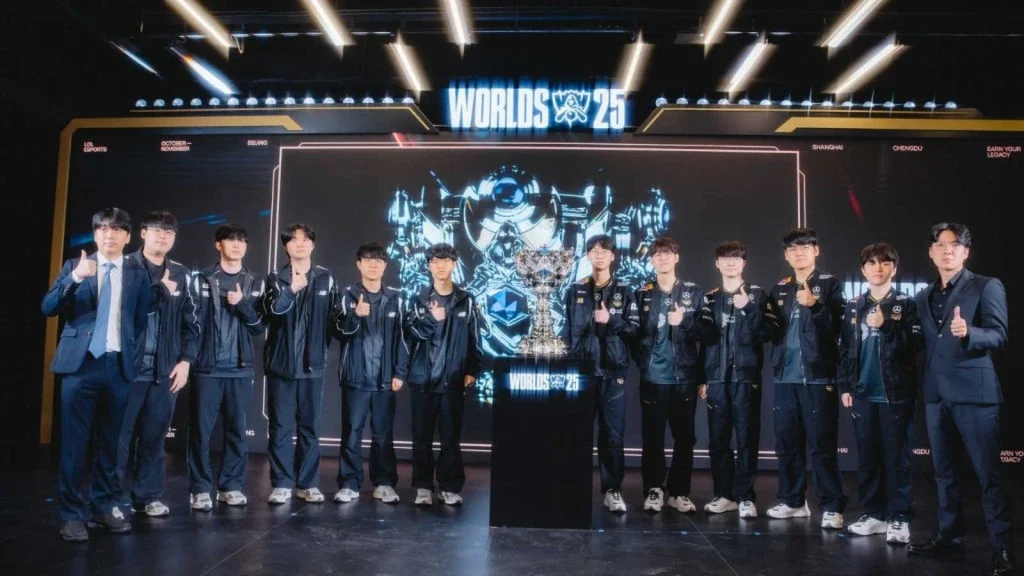
2025 rewrote the League of Legends rulebook. Riot Games marked the game’s fifteenth anniversary by tearing down the old ecosystem instead of throwing a party. A three-stage calendar and mandatory Fearless Draft turned the season into a grind for survival, where last year’s reputation means nothing if your champion pool is stale.
Analysts kept predicting change, and reality proved harder. Gen.G held the crown while LPL produced fresh threats such as Anyone’s Legend. Western squads are chasing, but the gap in class is still serious. By year’s end the veterans were back on top, showing that adapting through experience counts for more than big media names.
What follows breaks down the four forces that defined LoL in 2025.
How Fearless Draft reshaped the metagame and champion picks
Fearless Draft was the deciding factor in 2025. Riot Games forced it onto most international leagues, pushing players past their familiar meta picks. The conservative LCK was the lone holdout and kept its classic approach.
With three splits and qualifiers for three international events, the season became a nonstop gauntlet. Nobody gets a breather, and teams have to deliver immediately. A champion pool capped at five heroes will sink you on the schedule alone.
Key shifts in team structure:
The 2025 overhaul caused a seismic change in how pro organizations function. Coaches moved from the sidelines into the center of the action. Strategy now has to stay highly flexible across series of up to four and five wins, since Fearless Draft itself removes key champions mid-series. Personnel decisions followed: synergy now outranks star power, and big names no longer guarantee results. In 2025 the winners were teams with deep mutual understanding who could improvise unconventional comps on the fly. For viewers, this was the best call in fifteen years. Champions that had sat unused for years came back, adding depth that earlier seasons lacked.
How the 2025 formats compare in practice
| Parameter | Old Format (pre-2025) | New Format (Fearless + 3 Splits) | Effect on SEO and viewer retention |
|---|---|---|---|
| Champion variety | Low (locked into the meta) | Very high | +40% growth in dwell time |
| Player load | Moderate | Peak (burnout risk) | Nonstop news cycle for media |
| Strategic depth | Linear | Maze-like | Rich material for expert analysis |
Gen.G’s dominance and LCK’s systematic discipline
All through 2025, one team sat at the top of the League of Legends food chain: Gen.G. While rivals were still getting into shape, the Korean powerhouse showed a level of systematic discipline nobody could match.
Their MSI win in Vancouver was the expected result. The victory over T1 made them dominators for a second straight year. It’s also worth noting that the move to Fearless Draft in the Double Elimination bracket sparked a historic jump in viewership. That suggests audiences crave the kind of chaos Gen.G handles better than anyone in the world.
Anyone’s Legend’s success in the Chinese LPL
Want a counterpoint to the Korean machine? Look at Anyone’s Legend (AL). The Chinese side pulled off something close to impossible: with no marquee superstar, they became the only LPL force able to impose its game on Korean teams.
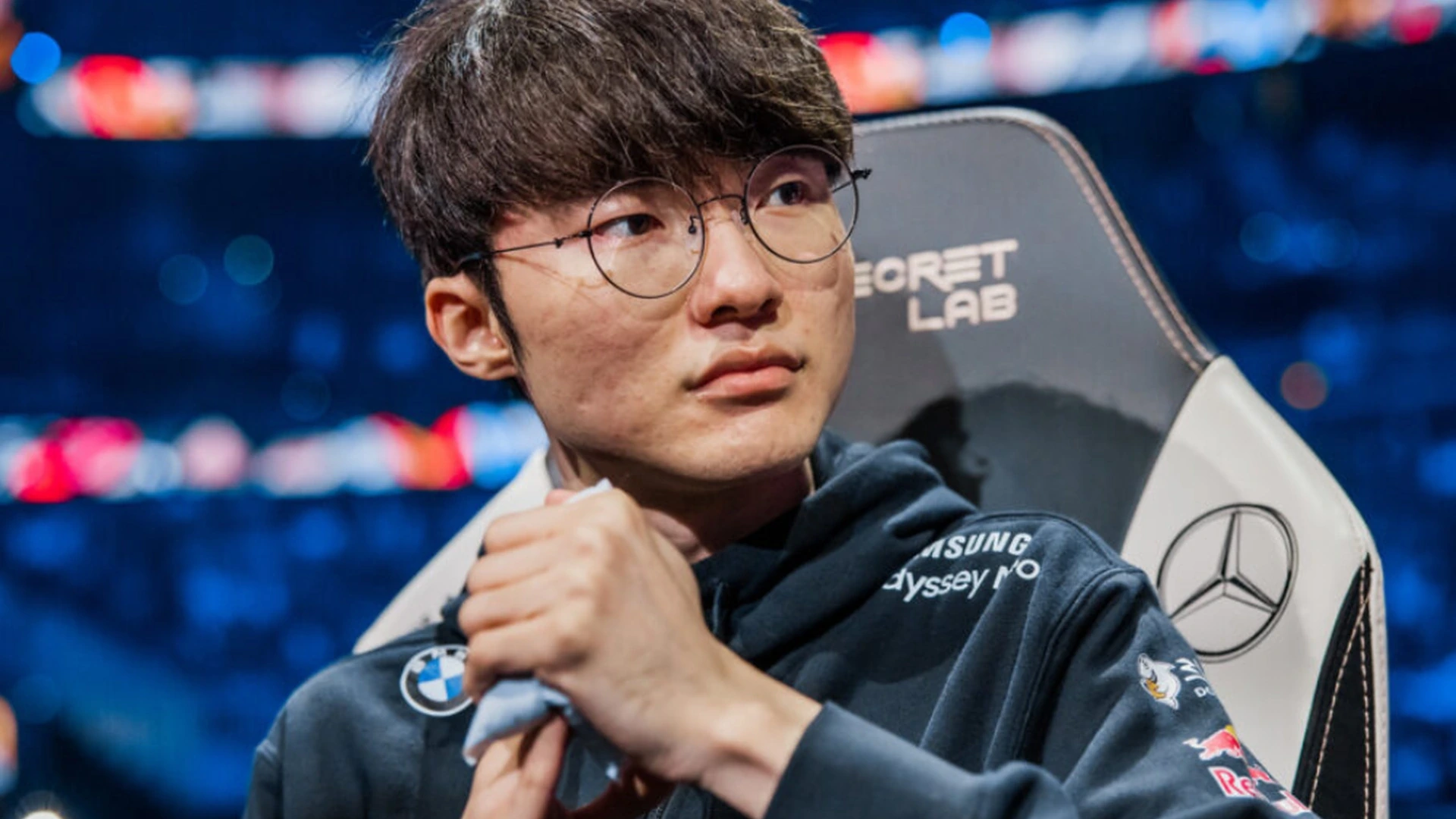
Their 2025 run was really about a missing final step. Losses to Gen.G at MSI and EWC, plus an exit to T1 in the Worlds quarterfinals in a best-of-five, point to a psychological barrier rather than a lack of skill. Keeping this roster together into 2026 is a direct test for the entire eastern region. Look closer and AL shows that synergy now matters more than individual contracts.
Competitiveness of the LEC and LTA regions
For the LEC and the former LCS regions, 2025 was a stretch of “bitter optimism.” The gap to the East is closing only on paper. Fearless Draft erased the advantage in preparing specific strategies, yet it exposed the West’s core weakness: difficulty making sound decisions amid the chaos of team fights.
Critical audit of Western teams:
- G2 Esports: Making the top 8 at Worlds again after a two-year slump is encouraging, but it reflects one team’s rebound more than progress across the whole ecosystem.
- New blood: FlyQuest and MKOI finally brought real competition to the international field instead of serving as filler.
- LTA failure: The American leagues’ rebrand to LTA is widely seen as a marketing misstep. Only the Southern Conference (LTA South) kept viewing numbers afloat. The fallout is predictable: a quick return to the LCS and CBLOL names in 2026.
Regional ratings across the international season
| Region | Adaptation Progress to Fearless | Viewer Retention | International Status |
|---|---|---|---|
| LCK (Korea) | Complete (systematic approach) | Peak | Dominant force |
| LPL (China) | High (driven by aggression) | Steady | Main contender |
| LEC (Europe) | Moderate (creativity-led) | Growth fueled by hype | Top-8 contender |
| LTA (Americas) | Low (structural problems) | Decline (Brazil excluded) | Outsider with clear limits |
Based on esports analytics data, 2026 is the moment of truth. Three international tournaments and more Bo2 series give Western teams a shot at “intensive therapy.” Given their track record, they were punished hardest during their packed schedules, and that busy calendar will now serve as their main training ground.
T1’s Worlds triumph and roster moves
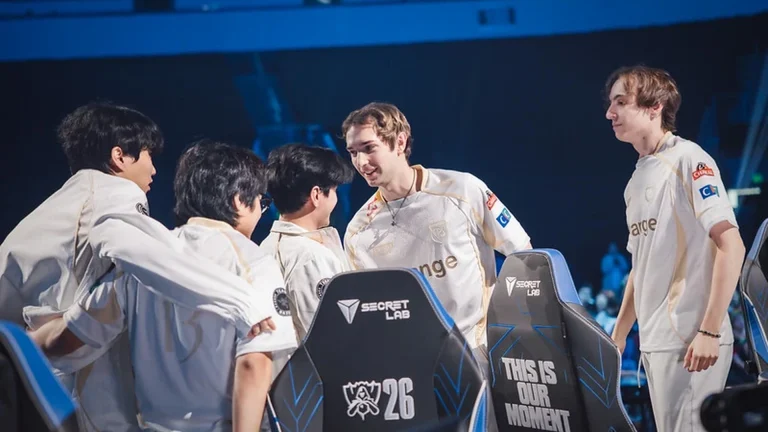
The season Riot Games filled with chaos and uncertainty through Fearless Draft ended in a predictable way: T1 hoisted the Summoner’s Cup in Chengdu, China. Lee “Faker” Sang Hyuk’s squad showed again that when the stakes peak, even a “new era” bows to the legacy of the greatest player in history.
T1’s route from the Play-In stage to the final
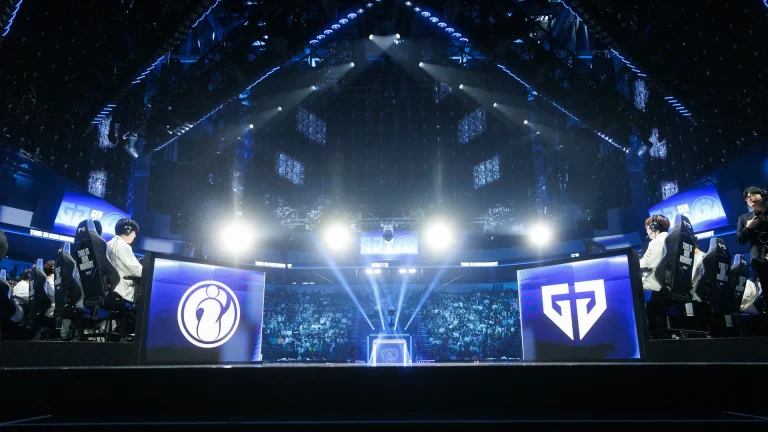
A three-peat for T1 is a major feat in its own right, but how this title was won deserves a closer look. For the first time, the defending champions came through the Play-In stage, opening against Invictus Gaming.
Who fell along the way:
- Anyone’s Legend: the Chinese challenge, halted by discipline.
- Gen.G: longtime rivals who faltered when it counted.
- KT Rolster: a regional derby decided in favor of the red side.
Gumayusi earns top honors in the finals
If Faker is T1’s foundation, Gumayusi has become the face of the 2025 season. His story is a classic redemption arc. After starting the year on the bench, he fought his way back to prove that being the world’s best ADC is not an inheritance. His finals performance earned him the Finals MVP award, capping a rollercoaster season.
Gumayusi’s move to Hanwha Life Esports and the HLE roster
The ideal scenario fell apart right after the title. A month ago, Gumayusi announced he was leaving T1. His new home is Hanwha Life Esports (HLE).
He also reunites with former teammate Choi “Zeus” Woo Jae. With that in mind, 2026 brings a major test: can the legendary shooter write his own history without the T1 name behind him, or is this the beginning of the end for a great dynasty?
| Measure | T1 result | Effect on the ecosystem |
|---|---|---|
| Milestone | First-ever Play-In triple title | Peak E-E-A-T credibility for the discipline |
| Individual profile | Gumayusi (MVP) | +200% rise in HLE media value |
| Regional reach | Finals held in China (Chengdu) | Record peak viewership across LPL and LCK |
League of Legends ecosystem update for the 2026 season
January 2026 marks the point of no return for League of Legends. Riot Games is planning a full reboot of mechanics and the esports calendar, not merely a patch. Insiders keep hinting at reshuffles, but here are the facts: new tools for top laners, the return of classic stats, and a schedule that leaves pro players almost no sleep.
Mechanical changes to splitpush and critical damage in the meta
Riot Games is rewriting the rules of Summoner’s Rift. Towers start nearly invulnerable but turn fragile by the late game. The aim is to bring splitpush back into the mainstream.
Key technical changes:
Object evolution: Baron Nashor now grants stronger buffs for sieges, forcing teams to choose between 5v5 fights and pressuring lanes.
- The Cretan renaissance: returning critical damage efficiency to 200% is a clear push toward aggressive play. T1 and Gen.G-level squads are already building strategies around this math.
- Role quests: the new top-lane task system speeds up farming of key items. Pull waves correctly and you gain a legal build-speed edge that significantly reshapes the pro scene.
- Expert case: Riven dominates top with a split quest. Farming the sideline before minute 15 grants a shield against ganks. It’s the only way to survive a meta where junglers have grown needlessly aggressive.
Tournament schedule and MSI and Worlds locations
The season opens at the end of January with the updated LEC and LCK. The Asian leagues will use the Demo theme as a base, which will even change the broadcast visuals.
| Event | Timing | Location / Notes |
|---|---|---|
| MSI 2026 | May | China (confirmed) |
| EWC | July | Prize pool $60M+ |
| Nations Cup | August | Showdown of national teams |
| Worlds 2026 | November | Finals in Shanghai (per insiders) |
With slots expanding to 5 per conference (America and Asia 2.5 each), the race for Worlds entry will become brutal. Insiders also confirm Worlds will be synced with the season’s final patches to avoid a one-hero meta.
Team predictions and new game mechanics
Gen.G and T1 remain Korea’s favorites. The Faker on the MFA will get enhanced wards (“new vision”), which becomes a deadly tool in the hands of a map control wizard. In China, BLG is betting everything on its updated bot lane, while Cloud9 in America hopes split buffs will finally carry it into the Worlds playoffs.
Trends of the season:
- Split strategies will erode the dominance of classic 5v5 fights.
- Worlds prize money will pass the $5 million mark.
- Fiora and Gwen will surge in SoloQ, where making an impact before minute 10 is essential.
MMR ranking reform and matchmaking management
The ranking queue is getting more transparent. Syncing MMR across Solo/Duo and Flex queues will remove the “boost” effect. Beginners will get WASD controls (based on PBE tests), easing mobile players into the game. Fast games will be cut to 15 minutes. Riot Games is betting on pace, aiming to cut out mid-season crises and AFK farming.