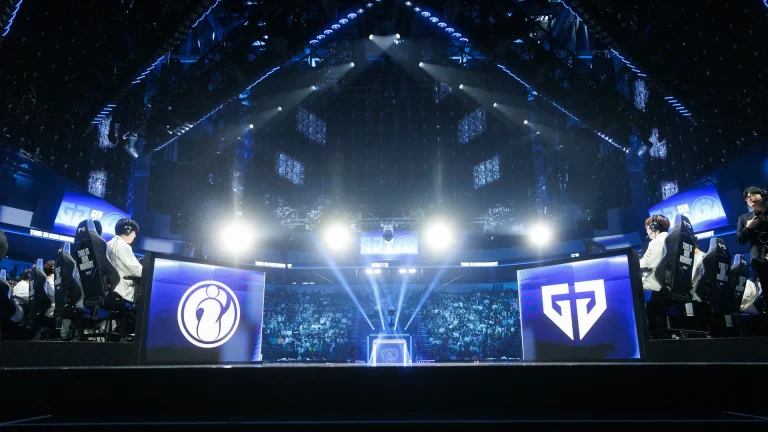
Worlds 2026 Swiss Stage Kicks Off With 16 Squads, Three Losses and You’re Out
Recovering from a setback matters as much as starting strong
All teams start with a 0-0 record. As rounds progress, the draw pairs each side with a rival holding the same record. Winners climb into groups with more victories, and losers drop into groups alongside other teams that have fallen behind. A first-round defeat is survivable, yet each subsequent match becomes harder to afford.

A team advances once it has three separate wins and goes home after three separate losses. Opening-round encounters are single games, so one result settles the outcome. Qualification and elimination matches stretch to as many as three games, with the first side to take two games claiming the series. That extra length lets teams rework their drafts and fix errors between games.
Regional lines blur once the draw begins
Representatives from Korea, China, EMEA, the Americas and Pacific competition are all present. Each region brings its own habits: certain squads contest neutral objectives early, others build leads through side lanes, and a few thrive when a game turns chaotic. Rather than isolating these approaches in a lengthy group stage, the Swiss format puts them up against each other right away.
Once the first round is over, each new pairing matches teams with identical records. Swiss Stage rules forbid rematches. This keeps every path distinct and forces coaches and analysts to scout a fresh opponent almost as soon as the pairing is announced.
Karmine Corp secure the last spot by winning the Play-In
Karmine Corp took the final open slot by defeating MVK Esports 3-0 in the Play-In final. The European side now sits alongside fifteen teams that qualified directly. Their recent series could each run up to five games, offering both an edge and a hazard. Karmine Corp arrive with momentum, while their rivals have fresh footage showing which champions and strategies they favour.
Repeating the Play-In game plan is not the immediate goal. Opponents grow stronger and more varied as soon as the main event begins. Karmine Corp need to sort out which tactics hold up against the tournament favourites and which were tailored specifically to beat Cloud9 or MVK.
Rules of the Swiss tournament phase
- Teams: 16
- Qualification rule: Win three separate matches
- Elimination rule: Lose three separate matches
- Decisive matches: Up to three games; the first team to win two games advances
- Other matches: One game
- Stage dates: October 23-31

A 1-1 or 2-2 record can turn perilous fast
The 1-1 and 2-2 brackets tend to produce the most nerve-racking moments of the Swiss rounds. At 1-1, a team keeps several paths open, but one more defeat closes most of them. At 2-2, both sides stand one series away from the quarter-finals and one series away from going out. Because the first side to win two games takes the series, luck plays a smaller role, and teams need more endurance and dependable champion picks.
That means a strong team can qualify without going undefeated, while an early front-runner can still stumble if later opponents find the same flaw. Fans should watch both the records and how the games are actually played. A 2-0 start is promising, but control of neutral objectives, several reliable draft options and the discipline to protect a lead say more about how far a roster can go in the knockout stage.

The timetable builds toward eight knockout places
Swiss matches are played from October 23 through October 31, and round draws are spread across that window. The knockout stage begins on November 3 and wraps up on November 14. With so little space between phases, qualified teams get almost no break before they have to prepare for a standard elimination bracket.
The key question is straightforward even though the pairings keep shifting: can a team collect three wins against different rivals before a third loss ends its run? Worlds 2026 now leaves the compact Play-In bracket behind and enters the phase where every major region is present and each result reshapes the next draw.